


Venezuela strongman Nicolás Maduro is in U.S. custody. But why aren’t these guys?
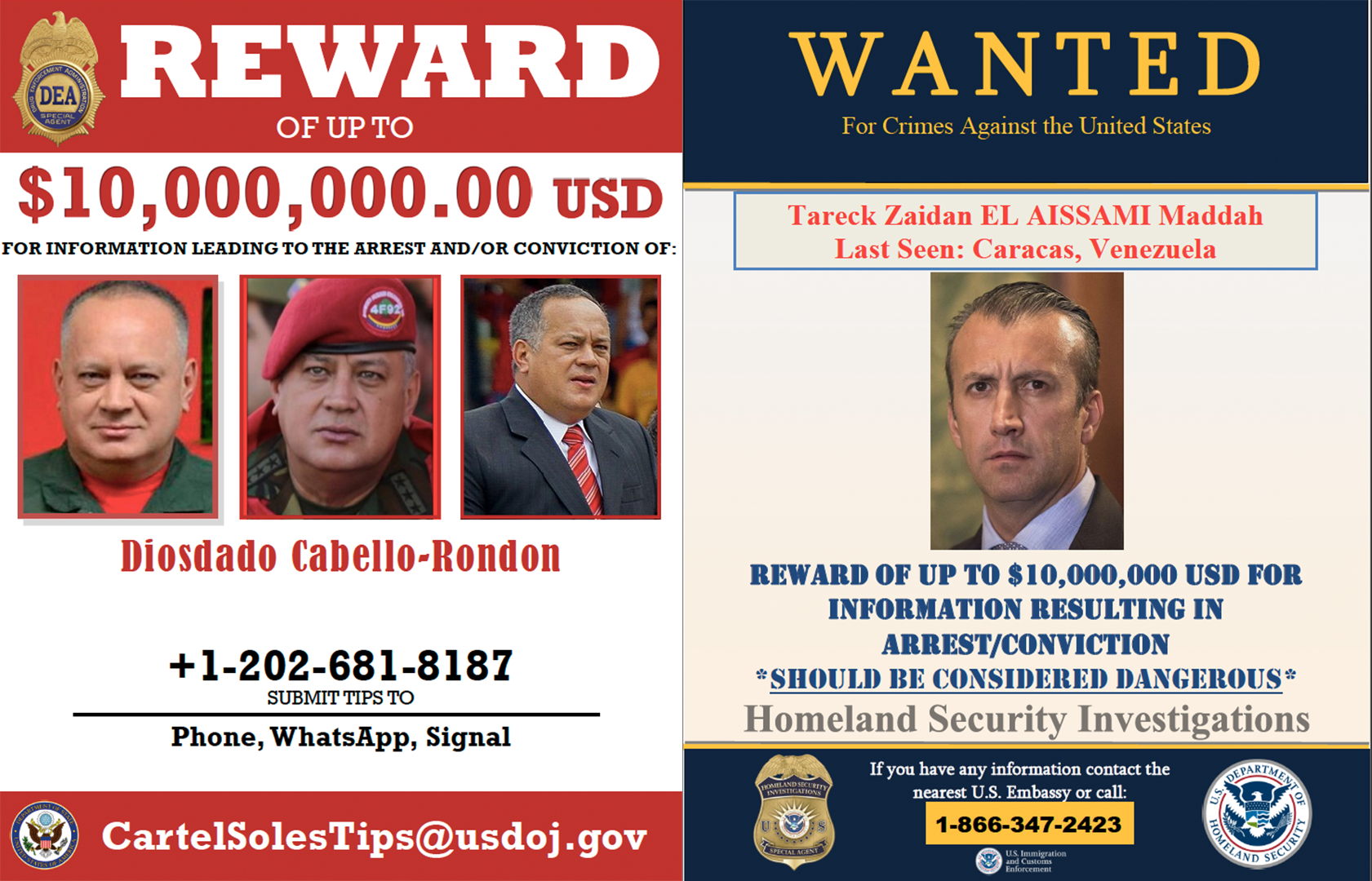
Many of the top henchmen who built, armed, and ran Venezuela’s criminalized state are still at large — commanding militias, controlling territory, and, according to U.S. prosecutors, still presiding over narco- and terror-linked networks.
That’s the hard reality now standing between Washington and its stated aims in Venezuela: stabilizing the country, reviving its oil economy, restoring democracy, and uprooting the foreign adversary networks entrenched in the regime’s security and financial apparatus.
Most notable is Diosdado Cabello Rondón, the country’s interior minister and a member of the Venezuelan armed forces. Listed as a co-conspirator in the Maduro indictment, Cabello is detailed as one of the principal architects and operational leaders of the Venezuelan state-embedded narco-terrorism enterprise known as the Cártel de Los Soles.
From at least 1999 through 2025, Cabello is alleged to have used his political, military, and security power to run and profit from a transnational conspiracy that fused the Venezuelan state with cocaine trafficking and collusion with U.S.-designated terrorist organizations. Prosecutors say his role combined strategic command with direct operational control, including coordinating weapons-for-cocaine exchanges with the FARC involving military-grade rifles, RPGs, and anti-tank systems. Authorities further allege that Cabello, alongside former vice president and oil minister Tareck El Aissami, conspired with former lawmaker Adel El Zabayar to traffic drugs and arms in coordination with Hezbollah and other terror-designated groups, and to recruit Hezbollah and Hamas operatives for training at clandestine camps in Venezuela to help plan and organize attacks against the United States.
But it’s his role in overseeing Venezuela’s colectivos, the state-aligned armed civilian militias used for political control and repression, that could represent one of the toughest obstacles to the U.S. gaining effective control on the ground in Venezuela.
To understand the challenge the U.S. faces in the colectivos, it’s instructive to look at Iran’s decades of effective oppression, including the most recent crackdown that has cost the lives of tens of thousands of Iranians. As one of Chavista Venezuela’s foremost allies, Tehran’s relationship with Maduro and his henchmen has extended far beyond the export of arms and development of financial and trade systems meant to evade sanctions, fund terror operations and launder hundreds of billions of dollars in stolen state assets. It has also exported an array of authoritarian tools of oppression, including one of the corrupt clerical regime’s most potent for dousing political dissent.
Core to the regime’s half-century brutal authoritarian rule has been the Basij, the state-sponsored, ideologically loyal paramilitary force composed of civilians who are trained and mobilized for internal control and regime defense by Iran’s terror-designated Islamic Revolutionary Guard Corps.
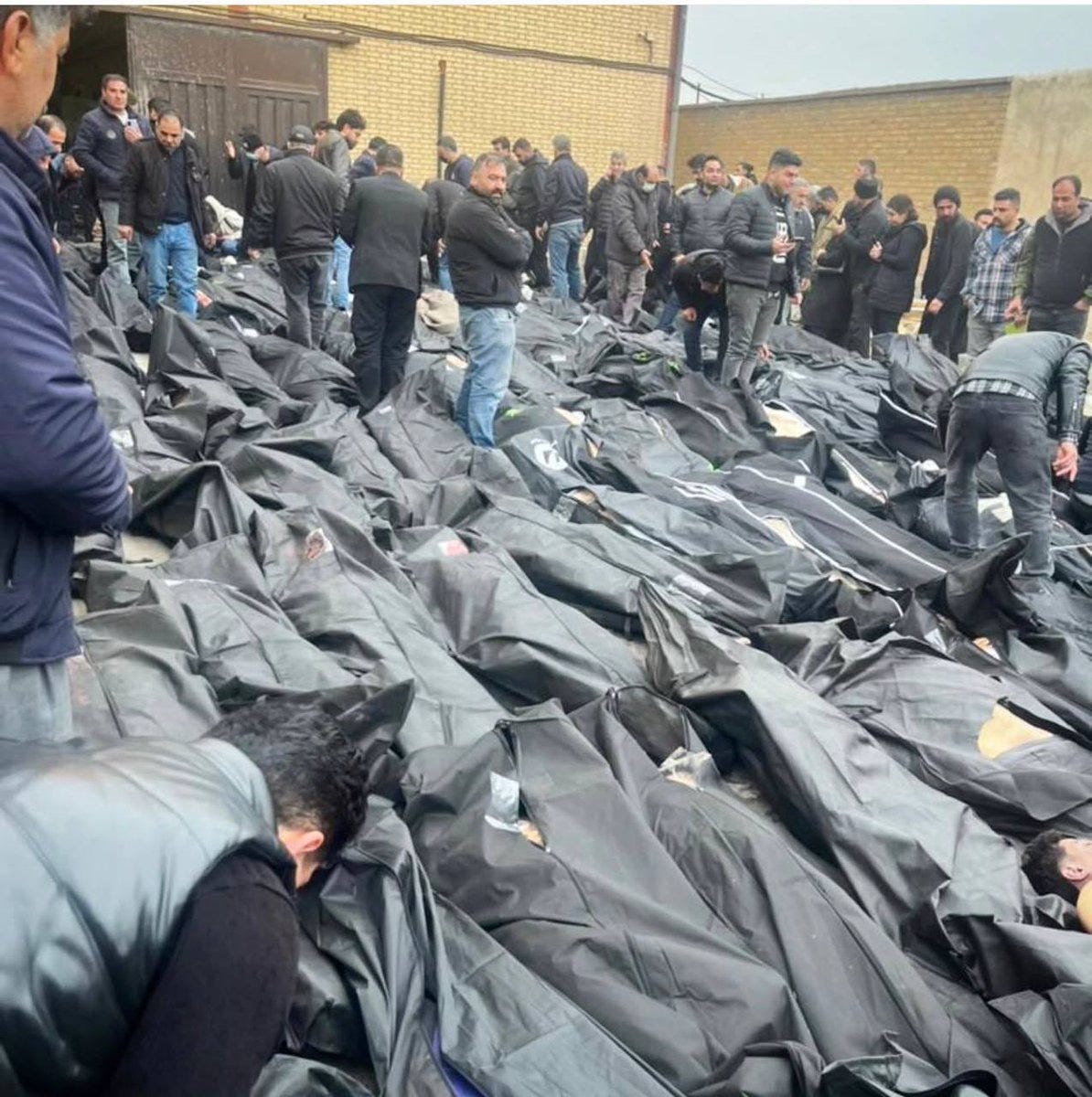
Scholars of Iranian influence in Latin America have long noted that this militia-model of oppression did not emerge in isolation. Iran’s IRGC and Basij leadership have advised Venezuela’s government on building and training its own civilian militias. In April 2009, for example, Brig. Gen. Mohammad Reza Naqdi, commander of the Basij paramilitary force, accompanied then-Iranian Defense Minister Gen. Mostafa Mohammad-Najjar on a high-level visit to Caracas at the invitation of then-Venezuelan President Hugo Chavez and his foreign minister at the time, Maduro. Gen. Naqdi’s role in these high-level meetings was to serve as an advisor to Venezuela’s Ministries of Defense and Interior to aid in training the colectivos. Since that meeting, the colectivos’ capabilities and role in political suppression have grown, those analysts say, using more advanced clandestine communication and espionage techniques.
Caracas’s colectivos are shaped by tactics and organizational principles learned from the Basij experience — trained for neighborhood control, political intimidation, and rapid-response operations that mirror Tehran’s internal security doctrine.
Since Maduro’s seizure, Cabello has reminded the U.S. of his power structure by appearing in several social media posts with security forces and colectivos.

In this context, it’s worth examining the December 23, 2025 memo issued by the U.S. Department of Justice’s Office of Legal Counsel advising President Trump on the planned use of the U.S. military to seize Maduro. In that 22-page memo, Assistant Attorney General Elliot Glaser says his advice is based on a key condition: no plans for a prolonged U.S. military presence.
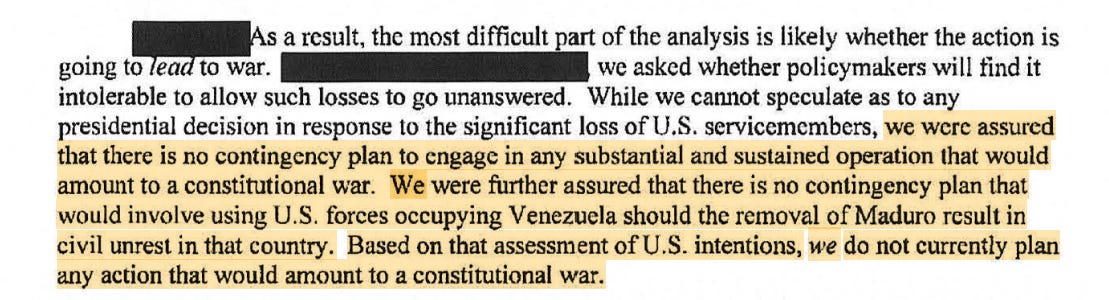
Therefore, as one of the most consequential figures in Venezuela’s security and political hierarchy, Cabello stands at the center of a strategic dilemma for U.S. policymakers: he can act to either help restrain violent backlash against a transition or mobilize against opponents — igniting the very turmoil Washington seeks to avert.
U.S. engagement with Cabello has been more complex than outright ostracization. Multiple reports indicate that U.S. agencies, including the Central Intelligence Agency, have maintained contact and coordination with Cabello and other influential figures in Caracas as part of efforts to stabilize Venezuela, gather intelligence, and negotiate transitions of power. While details are often opaque, senior U.S. officials have acknowledged dialogues with Cabello dating back months before formal operations against Maduro, including discussions about security arrangements and minimizing violence during political shifts.
(In the absence of military action against this key engineer of Venezuelan corruption and political oppression, it is also notable that U.S. officials say intelligence assets within the Maduro government were critical in crafting a successful seizure mission.)

Cabello is not the only architect of corruption who remains at large. Others include Tareck El Aissami, Maduro’s former head of the oil and interior ministries, and Alex Saab, the Colombian businessmen of Lebanese descent who was arrested in 2020 en route from Venezuela to Iran. U.S. prosecutors and U.S. security officials have said the two men not only oversaw the massive money-laundering operations of the state, including through state oil, gold, food and construction contracts, but are also tied to Iran’s strategic operations in Venezuela. Saab was later released in a prisoner swap, and despite being outed as a former Drug Enforcement Administration informant, he was subsequently given senior government posts, including minister of industries. Curiously, Saab was ousted from that position in the wake of the Maduro seizure.
The fact that those men and others remain free—and Cabello’s open public embrace of these militias—underscores the risk that removing Maduro has decapitated the regime without dismantling the system — leaving Washington facing a potential security, governance, and legitimacy quagmire.
To get a sense of the challenge facing the U.S., take a gander at this list of key officials and facilitators indicted or sanctioned by the U.S., many of whom remain in power or at large: https://public.flourish.studio/visualisation/27431936/
