


U.A.E. “Spy Sheikh” Tahnoon bin Zayed Al Nahyan—the brother of UAE’s president and the emirates’ national security advisor—has been red-flagged as a risk to U.S. national security for years.
Three former U.S. officials were criminally prosecuted for working for one of the sheikh’s spy companies. Top lawmakers—both Democrat and Republican— have long cited his companies’ ties to China’s military industrial complex as posing an acute risk to national security, especially the potential transfer of sensitive technology. His companies have been called out by human rights watchdogs, including at the U.S. State Department, for alleged abuses.
But after the sheikh paid $500 million for a 49% stake in the president’s crypto venture, World Liberty Financial, Trump bucked all those warnings and instead his Commerce Department green-lit critical dual-use tech sales to one of the spy chief’s firms, G42.
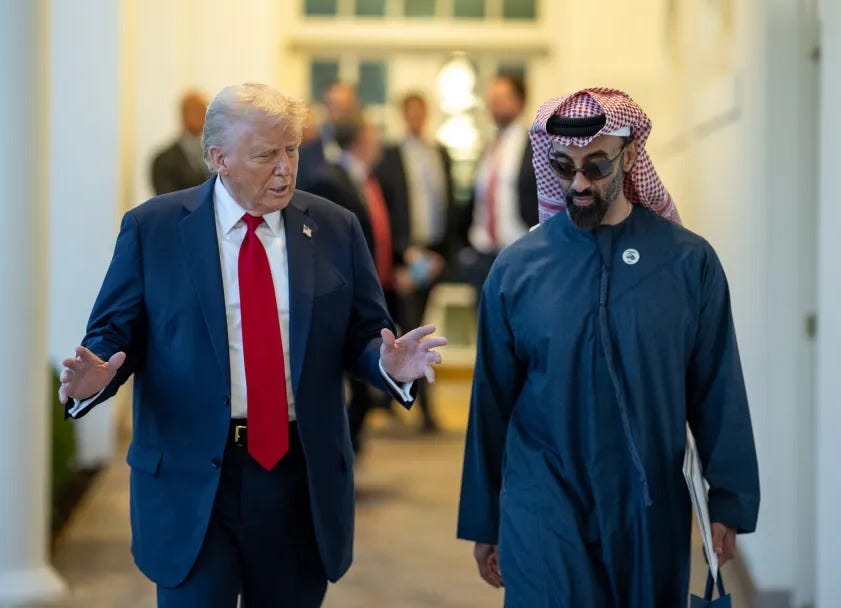
Democratic lawmakers have called for congressional hearings into the deal—secretly inked just four days before President’s inauguration last year—and last year the Department of State’s Inspector General said it had referred the matter to its Office of Investigations.
“…Trump Administration officials must testify in front of Congress on mounting evidence that they sold out American national security in order to benefit the President’s crypto company – and about whether any officials lined their own pockets in the process,” Sen. Elizabeth Warren, the Massachusetts Democrat whose role as ranking member of the Senate Banking Committee gives her authority over both crypto regulations and the export of sensitive technology.
“This is corruption, plain and simple. The Trump Administration must reverse its decision to sell sensitive AI chips to the United Arab Emirates.”
The White House rejected the allegations of corruption, saying there is no conflict of interest and the deal has not influenced administration policy.

To be sure, the revelation is just one of a series of cases fueling worries that President Trump’s business dealings represent major conflicts of interest, not only as breaches of ethics rules for government officials, but also potential corruption that risk compromising national security.
Aside from fear that Tahnoon’s business relationship with Trump gives the U.A.E.’s national security advisor leverage over the U.S. commander in chief, the particular concern is that the deal improperly persuaded the administration to approve the export of specialized AI computer chips.
The export of dual-use technology—so-called because it has both civil and military uses—is controlled by the U.S. Commerce Department’s Bureau of Industry and Security to ensure that it isn’t used by foreign adversaries to the detriment of the U.S. and its allies. Export controls were originally used to prevent traditional arms proliferation, but the evolution of cyber capabilities and computing power required national security officials in recent years to start protecting against the sale of U.S. technology for electronic warfare.
That is why the U.S. in 2021 took aim at former U.S. national security officials who were selling their expertise and insight to top-paying bidders overseas. To discourage that practice and set an export-control precedent, the Department of Justice in 2021 criminally prosecuted three former intelligence and military personnel for providing a “defense service” to a U.A.E. company for the benefit of the emirates’ government in violation of the arms control laws. That company was DarkMatter, a firm used by Tahnoon and U.A.E.’s intelligence services to hack the devices of journalists and political dissidents around the world, including in the U.S.. Among them include Loujain Alhathloul, a Saudi Arabian human rights activist who campaigned for the rights of women and girls in the country, who alleges DarkMatter’s hacking services led to her imprisonment and torture.
Democratic lawmakers urged the administration to levy sanctions against the company for gross human rights abuses.
More recently, the intelligence community has been particularly worried about China developing artificial general intelligence first. Such an advancement would mean Beijing could gain a decisive, potentially irreversible advantage across military power, intelligence dominance, economic coercion, and global influence—undermining U.S. national security and the existing world order.
The concern about Tahnoon’s companies are bipartisan.
“Without restrictions on G42, the hardware and software developed by these U.S. companies are at significant risk for diversion to G42’s PRC- based affiliates, many of which support the CCP’s surveillance state and human rights abuses,” Mike Gallagher, a former military intelligence veteran and a Republican Representative of Wisconsin, wrote in 2024 letter to the Commerce Department. As Chairman of the House Select Committee on the Chinese Communist Party, Rep. Gallagher said G42’s network of affiliated companies—including DarkMatter—and its ties to China’s military and intelligence represented sufficient national security threats to warrant their inclusion on the Bureau of Industry and Security’s list of banned companies.

The 35,000 Nvidia Blackwell chips (GB300s) Trump’s Commerce Department approved for sale to G42 are one of, if not the most, powerful AI chips available, built to run the largest and most advanced artificial-intelligence systems, the type of chip engineered to be fast enough to support cutting-edge generative AI, complex military simulations, and intelligence analysis at national scale.
After the revelations and ties to China were revealed, G42 and Tahnoon engineered a charm offensive, promising to work more closely with the U.S. on data security and narrow its cooperation with Chinese companies, facilitating partnerships with Microsoft and OpenAI. The sheikh’s company says it operates in alignment with U.S. export controls and is subject to audits and coordination with the BIS.
Some officials who objected to the chip sale were later fired, according to at least one report.
Non-partisan analysts, including the Congressional Research Service continue to emphasize the U.A.E.’s ongoing relationships with U.S. adversaries as as national security risk.
”U.S.-Emirati relations remain close, but the UAE also “hedges” its relationship to the West by maintaining close ties to China, Russia, and other U.S. rivals,” the CRS said in a report last month, noting China is estimated to be the emirates’ largest trading partner and continuing military cooperation.
Indeed, it isn’t clear the extent to which Tahnoon, G42 and its CEO, Peng Xiao, have severed business ties with China.
“Xiao has also served as the executive director of a Chinese subsidiary firm fined by the State Department for violating export controls,” Jeff Smith, director of the Heritage Foundation’s Asian Studies Center wrote last year. “While a potential boon for U.S. tech firms, the Gulf’s concerning and increasingly widespread tech ties to China reinforce the need for robust security protocols tied to the sale of advanced chips,” he said.
Former Rep. Gallagher, in his 2024 letter to the Commerce Department, said that, according to documents his select committee had reviewed, “Xiao operates and is affiliated with an expansive network of UAE and PRC- based companies that develop dual-use technologies and materially support PRC military-civil fusion and human rights abuses.”
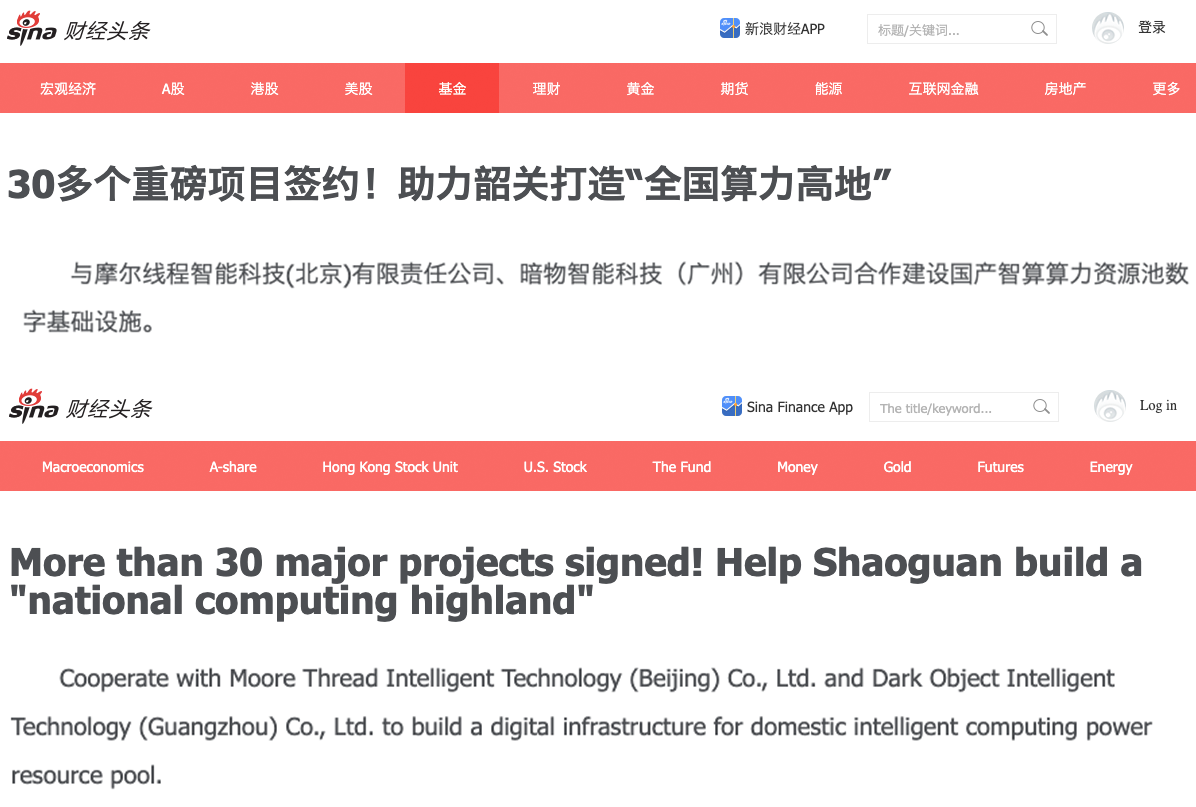
One of those companies the House Select Committee urged the BIS to place on its entity list as G42 affiliate, Dark Matter AI Technology ( Guangzhou) Co. , Ltd (暗物智能科技(广州)有限公司), appears to be still active, according to official Chinese records. The firm has garnered more than $60 million in investment from Chinese state-owned companies, and is viewed as strategically important to China’s AI development, according to the Select Committee.
Couldn't agree more; the sentence 'Trump bucked all those warnings and instead his Commerce Department green-lit critical dual-use tech sales to one of the spy chief’s firms, G42' perfectly encapsulates the alarming disregard for national security and human rigths for what appears to be personal financial gain, which is frankly a terrifying policy vulnerability given the nature of sensitive AI technology.